And why they matter more than you think!
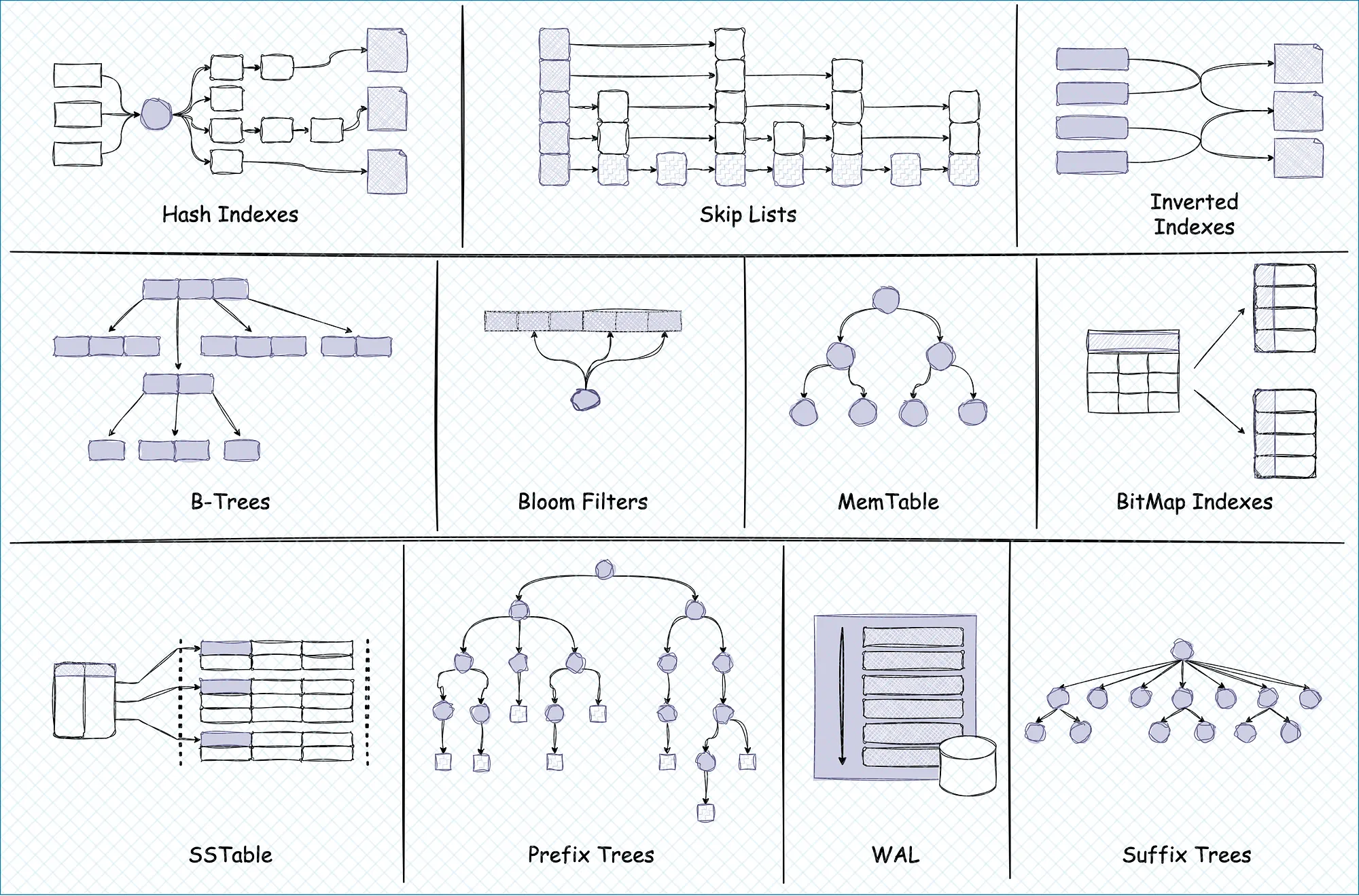
Databases often employ a number of specialised data structures to ensure high performance storage and retrieval of data. While there exists thousands of databases in the wild, there are only a handful of data structures powering them all!
In this blog post, we are going through 11 such data structures. We will talk about the features of that data structures, why & how they are used in database engines, and which famous databases use them internally.
Let us get started then!
Hash Indexes
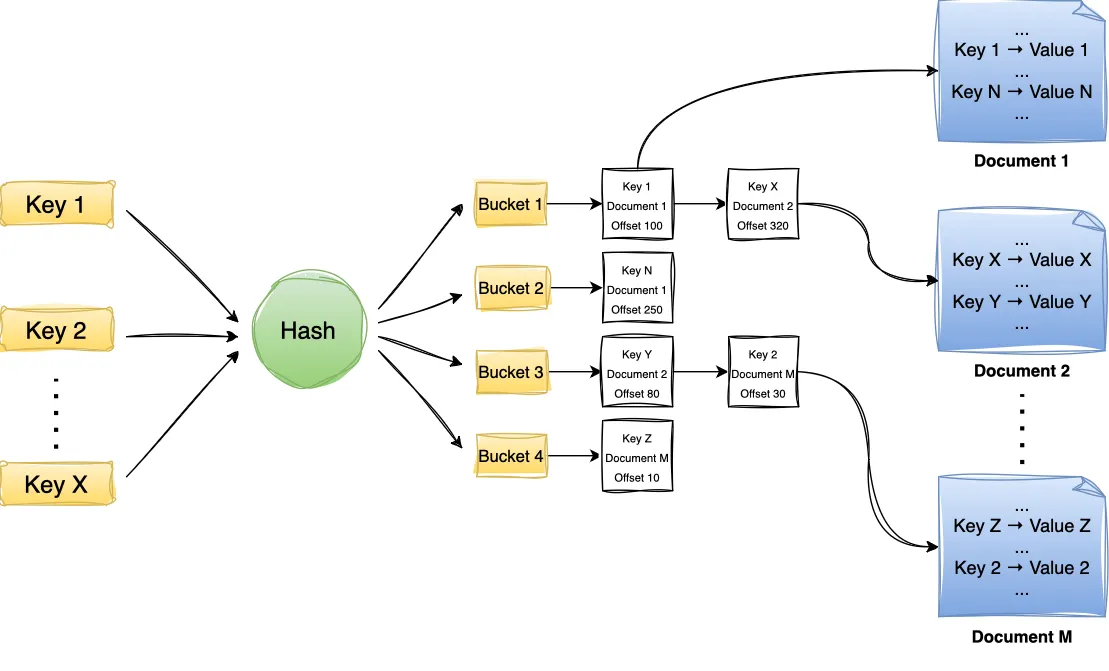
Hash indexing is a technique that uses an in-memory Hash Map to enable fast key lookups. Each key is hashed and mapped to a disk pointer, allowing the system to directly fetch the corresponding value with a single disk seek.
A big disadvantage of Hash indexing is the fact that the entire structure needs to be maintained in memory. If the number of keys is too large to fit in the memory, hash indexes won’t work!
Some of the famous databases that uses Hash Indexes includes ~